
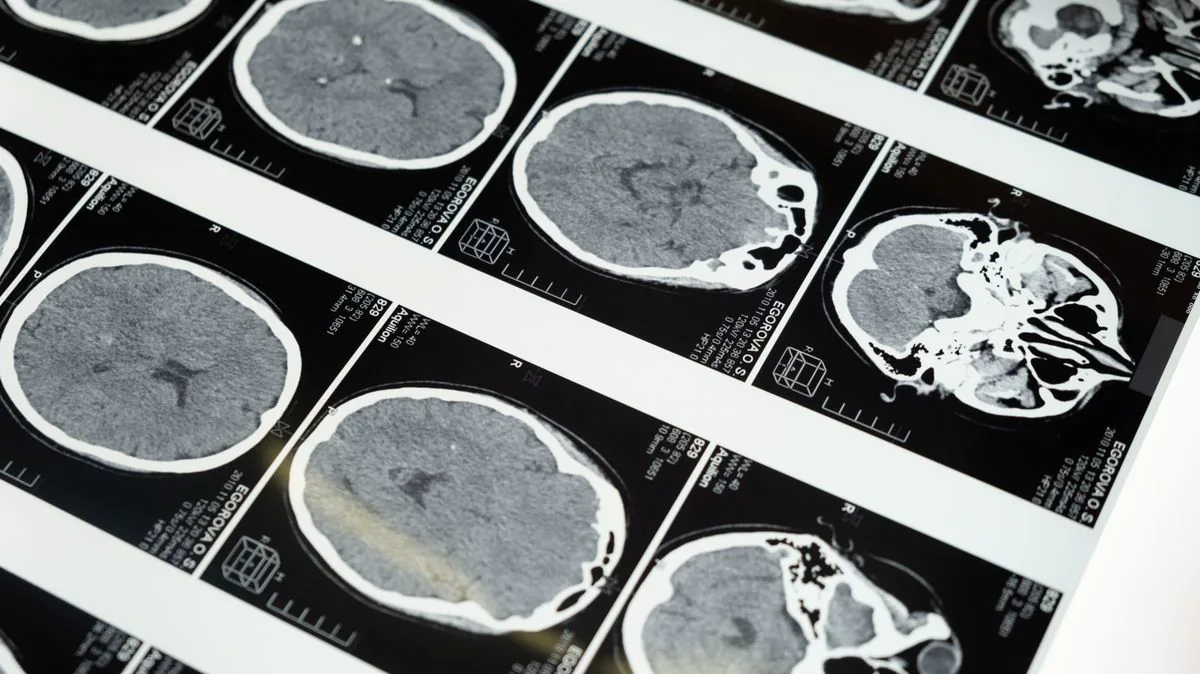
Few claims about drugs have stuck as firmly as the idea that cannabis kills brain cells. It gets repeated in classrooms, at kitchen tables and in prevention campaigns, yet its origin has nothing to do with modern neuroscience. It traces back to a 1974 experiment in which monkeys were strapped into gas masks. Fifty years later, the argument is still running.
The question deserves a careful answer, because two opposite mistakes meet in the middle of it: claiming THC destroys the brain, and claiming it is entirely harmless. The scientific literature supports neither. What it shows instead is a far more layered picture, with lines of evidence that openly contradict one another and methodological limits worth understanding before drawing conclusions.
This piece walks through what has actually been measured: cell cultures, brain volume on MRI, cohorts followed for decades, twin studies and the largest functional neuroimaging study published to date. It also covers what remains unknown.
Where the myth came from: the Tulane monkeys, 1974
In 1974, Tulane University psychiatrist Robert Heath announced he had found brain damage in rhesus monkeys exposed to marijuana smoke. The story travelled fast and reached American political rhetoric: Ronald Reagan, then governor of California, stated that permanent brain damage was “one of the inevitable results” of marijuana use.
The method was the problem. The animals were restrained in airtight masks and forced to inhale the equivalent of 63 marijuana cigarettes in five minutes without adequate ventilation. The neuronal death observed was consistent with asphyxiation and carbon monoxide poisoning rather than THC toxicity. The study was never replicated, and later work, including research at the National Center for Toxicological Research, contradicted its conclusions.
A flawed origin story does not settle the question. It just means the answer has to be found somewhere else.
What “killing brain cells” actually means
In neuroscience, neuronal death (necrosis or apoptosis) is a specific, measurable event: the cell breaks down and is not replaced. That is what happens in a stroke, in severe alcohol poisoning or in neurodegenerative disease.
None of that has been documented in human brains as a result of cannabis use. One anatomical detail matters here: CB1 receptors, the target of THC, are abundant in the hippocampus, prefrontal cortex, cerebellum and basal ganglia, but scarce in the brainstem, which controls breathing. That is why there are no fatal cannabis overdoses comparable to opioid overdoses. The absence of acute lethality does not mean the absence of effects, but it does rule out the most catastrophic mechanism.
What researchers do see is different: functional changes, receptor adaptations and small structural differences whose cause and reversibility are still being argued about.
A petri dish is not a brain
There is a body of in vitro neurotoxicity research. The most cited paper is Chan and colleagues, published in The Journal of Neuroscience in 1998: applying THC to cultured hippocampal neurons produced cell shrinkage, DNA strand breaks and apoptosis, in a process mediated by the CB1 receptor and by free radicals generated through the prostanoid pathway.
The caveat is decisive. Those experiments use concentrations far above anything a smoker’s brain reaches, applied continuously to isolated cells with none of the regulation a whole organism provides. Extrapolating straight to a human consumer is not justified.
And some literature points the other way. In 2005, a team reported in The Journal of Clinical Investigation that certain cannabinoids promote hippocampal neurogenesis in adult rodents, with associated anxiolytic effects. Depending on the compound, the dose and the model, cannabinoids have shown both toxicity and stimulation of new neuron formation. A body of evidence that contradicts itself does not license confident headlines.
Brain volume: the most contradictory chapter
Structural MRI studies compare the size of specific regions in users and non-users. Several meta-analyses have found somewhat smaller volumes in the hippocampus, orbitofrontal cortex and cerebellum among regular adult users.
The finding is not robust. A meta-analysis focused specifically on young regular users found no volumetric alterations, and no effect of age or level of use. And in 2015, Weiland and colleagues published in The Journal of Neuroscience a study in which, once groups were carefully matched on alcohol use, age and sex, any association between daily marijuana use and volume or shape measures of the nucleus accumbens, amygdala, hippocampus and cerebellum disappeared.
That is probably the central problem in this entire field: alcohol and tobacco travel with cannabis extremely often, and both have documented effects on the brain. Separating each substance’s contribution is difficult, and many older studies did not do it well.
The Dunedin study: most cited, most disputed
In 2012, Meier and colleagues published in PNAS results from the Dunedin cohort in New Zealand, which has followed more than 1,000 people born in 1972-1973 from childhood to age 38. The finding: those who started using cannabis in adolescence and developed persistent dependence showed a drop of roughly eight IQ points between childhood and midlife, with incomplete recovery after quitting.
The pushback came quickly. In 2013, economist Ole Rogeberg published an analysis in the same journal arguing that the pattern was consistent with confounding by socioeconomic status, which shapes both IQ trajectories and the likelihood of using cannabis. The original team replied that adjusting for socioeconomic indicators did not attenuate the effect. The exchange was never fully resolved.
The twin studies that complicated the case
The most elegant way to control for genetics and family environment is to compare twins who differ in their cannabis use. In 2016, Jackson and colleagues published in PNAS results from two longitudinal twin cohorts assessed at ages 9 to 12, before any cannabis exposure, and again at 17 to 20.
Users scored below non-users, just as in Dunedin. But when each using twin was compared with their abstinent sibling, the difference vanished: users did not decline more than their own brothers and sisters. No dose-response relationship appeared either. The authors’ reading is that the observed association largely reflects shared family factors that predict both cannabis initiation and lower intellectual attainment.
The largest brain function study so far
In January 2025, Gowin and colleagues published in JAMA Network Open the largest functional MRI study of cannabis conducted to date: 1,003 adults aged 22 to 36 from the Human Connectome Project, with brain imaging, urine toxicology and use histories.
Among heavy lifetime users (more than 1,000 uses), 63% showed reduced brain activity during a working memory task; among recent users, 68%. The regions involved were the dorsolateral and dorsomedial prefrontal cortex and the anterior insula, and lower activation tracked with worse performance.
What they did not find matters just as much: across the other six tasks assessed — reward processing, emotion, language, motor function, relational reasoning and theory of mind — there were no statistically significant effects. The authors themselves stress that the design is cross-sectional and that longitudinal work is needed to know whether cannabis causes that pattern or merely accompanies it.
The 72-hour rule: how much of this reverses
The reference meta-analysis on cognition came from Scott and colleagues in JAMA Psychiatry in 2018, pooling 69 studies in adolescents and young adults. They found a small but consistent deficit in learning, delayed memory, processing speed, attention and inhibition.
The detail that reframes it: when studies were sorted by length of abstinence, the difference was no longer apparent beyond 72 hours without use. In other words, much of what had been read as cumulative damage may reflect residual THC effects — the compound lingers in the body far longer than the high lasts — or withdrawal symptoms in heavy users.
Receptors tell a similar story. In 2012, Hirvonen and colleagues showed in Molecular Psychiatry, using PET imaging, that daily smokers had fewer cortical CB1 receptors in proportion to their years of use. After roughly four weeks of monitored abstinence, receptor density returned to normal across virtually all regions. Adaptation, not destruction.
The adolescent brain: where caution is warranted
The prefrontal cortex keeps maturing well into the twenties, and the endocannabinoid system takes part in synaptic pruning and myelination during that window. This is the strongest biological argument for treating adult and adolescent use differently.
Even so, the empirical evidence in young people is less conclusive than commonly reported: the meta-analysis of brain morphology in adolescents found no volume differences, and twin studies point toward family factors. What is better established is that early onset and frequent use are associated with worse academic outcomes, a higher risk of cannabis use disorder and a greater likelihood of psychiatric problems.
In the United States, the picture from Monitoring the Future has been broadly similar to Europe’s in recent years, with adolescent use flat or declining even as adult use rises and products become more potent. Average THC content in the cannabis varieties sold in regulated US markets is now routinely above 20%, several times the concentration typical of the material used in the older studies described here. That alone limits how far decades-old findings can be applied to today’s products.
Psychosis and dementia: the risks with real support
The link with psychosis is the best documented. The European EU-GEI study, published by Di Forti and colleagues in The Lancet Psychiatry in 2019, compared 901 first-episode psychosis cases with 1,237 controls across eleven sites. Daily use multiplied the odds of a psychotic disorder by 3.2, and daily use of high-potency cannabis (above 10% THC) by 4.8. The authors estimated that 12.2% of cases would be avoided if high-potency cannabis were not available.
More recent and far less certain is the dementia link. In 2025, Myran and colleagues published in JAMA Neurology a follow-up of six million adults in Ontario between 2008 and 2022. Those who had received emergency care for cannabis had a 23% higher risk of a dementia diagnosis within five years than people who came in for other reasons, and 72% higher than the general population. The authors caution that this population represents severe problematic use and that the design cannot establish causality.
Neither psychosis nor dementia implies “dead neurons” from direct THC action. They are risks of a different kind, and they concentrate in specific profiles: daily use, high potency, early onset and pre-existing vulnerability.
What can honestly be said today
There is no evidence that cannabis kills brain cells in humans, and the experiment that launched the idea was methodologically indefensible. Nor is it harmless: it measurably alters activity in regions tied to working memory, produces a reversible adaptation of CB1 receptors, and is associated with real psychiatric risks when use is heavy and starts early.
Most of the measured cognitive deficit appears to fade after a few days of abstinence, and the studies that best control for genetics and family environment substantially shrink the effect attributable to cannabis. What is missing are large longitudinal studies following the same people before, during and after use, with rigorous controls for alcohol and tobacco; we track them as they appear in our roundup of new scientific studies on marijuana.
On the legal side, the picture shifted in 2026. On 23 April, the US Department of Justice issued a final order moving state-licensed medical cannabis and cannabis in FDA-approved drug products to Schedule III, while adult-use cannabis stayed in Schedule I. The DEA opened an expedited hearing on 29 June 2026 to weigh broader rescheduling. Beyond the commercial implications, the change matters here for one reason: Schedule I status has been a practical barrier to rigorous clinical research for decades, and this question needs exactly that kind of research.
The reasonable conclusion is neither reassuring nor alarming: cannabis does not destroy the brain, but it interacts with it in ways that are still not fully understood, and that uncertainty weighs more heavily the younger the user and the heavier the exposure.
Este artículo también está disponible en español: ¿El cannabis mata neuronas? Qué dice realmente la ciencia.