
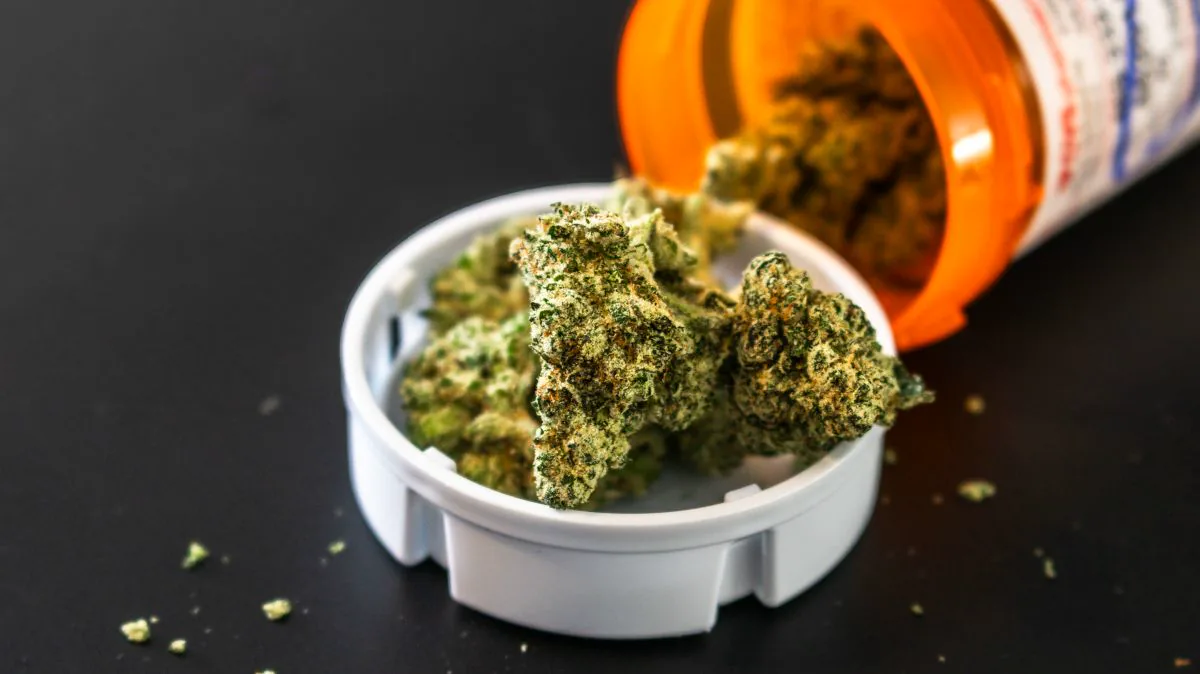
If you are one of the millions of Americans registered as a medical cannabis patient, it is reasonable to ask whether that status follows you on vacation. Spain has a reputation as one of Europe’s more relaxed countries on cannabis, and in 2025 it finally approved a framework for medical use. So does a medical marijuana card in Spain count for anything?
The short answer is no. Spain does not recognize US state medical cards, its own medical program is limited to hospital-prescribed preparations, and neither US nor Spanish law lets you bring dispensary cannabis across the Atlantic. There are, however, legitimate routes for patients who rely on approved cannabinoid medicines, and they are worth knowing before you book.
This guide is based on official sources from Spain and the US. It is general information, not medical or legal advice.
Why Spain does not recognize a US medical card
A medical marijuana card is issued under state law. It certifies that you qualify for a state program; it is not a prescription in the federal or international sense. Most US states do not even honor each other’s cards, and no European country has any mechanism to accept them.
Spain, like the rest of the EU, operates under the UN drug control treaties, which treat cannabis as a controlled substance with tightly limited medical uses. Under that system, medical cannabis is something prescribed by a doctor within the national health framework and supplied through regulated channels. A card from Michigan or Florida falls outside all of it.
In practice, showing your card to a Spanish police officer, customs agent or pharmacist will not change how you are treated.
How medical cannabis works in Spain since 2025
Spain’s first specific framework is Royal Decree 903/2025, approved on October 7, 2025, published in the official gazette (BOE) on October 9 and in force the following day. It regulates standardized cannabis preparations used to make compounded medicines, known in Spanish as fórmulas magistrales tipificadas.
The rules are strict. Only specialist physicians working in a hospital setting can prescribe, and dispensing is reserved for hospital pharmacy services. Retail pharmacies cannot sell these preparations, and there are no dispensaries.
The decree also tasked the Spanish Agency of Medicines and Medical Devices (AEMPS) with publishing official monographs in the National Formulary. The first, published in January 2026, covers a standardized THC and CBD oral solution. According to specialized Spanish health press, it is intended for four clinical situations: refractory chronic pain, spasticity in multiple sclerosis, severe forms of epilepsy, and nausea and vomiting from chemotherapy, generally when approved medicines have failed.
Implementation has been slow. A product can only be dispensed once a manufacturer’s standardized preparation is entered in the AEMPS registry, and trade press reported the first registrations in July 2026. Smoking dried flower is not part of the program.
Could a visitor get a prescription in Spain?
In theory, anyone treated by a hospital specialist could be considered. In practice, a tourist is very unlikely to get access. The framework is designed for patients under ongoing hospital care, with follow-up shared between the prescribing doctor and the hospital pharmacy to monitor effectiveness and side effects.
That is not a process that fits a one or two-week trip, and there is no fast-track for foreign patients. It is also unclear, from the published rules, how private hospitals will take part once supply is established. If you are moving to Spain long term, the situation is different, and you should discuss it with your doctor once you are in the Spanish health system.
Cannabinoid medicines that are already available in Spain
Before the 2025 decree, cannabis-based treatment in Spain meant a handful of approved medicines, and they remain available. The best known are Sativex (nabiximols), an oromucosal spray authorized for spasticity in multiple sclerosis, and Epidyolex, the European name for Epidiolex, a CBD medicine approved for certain rare forms of childhood epilepsy.
Both are prescription medicines dispensed under Spanish rules. If you already take one of them in the US, the conversation with a Spanish doctor is far more straightforward than any discussion about flower or oils.
Leaving the US with cannabis medicine: the rescheduling caveat
On April 22, 2026, the DEA moved FDA-approved marijuana products and marijuana covered by a qualifying state medical license from Schedule I to Schedule III. Some patients have read this as permission to travel with their medicine. It is not.
The rule states that imports and exports of rescheduled marijuana still require a permit, which individual patients do not have. US Customs and Border Protection continues to warn that crossing an international border with marijuana, including medical marijuana, can lead to seizure, fines or arrest. And even if you left the US without incident, Spanish customs would treat the cannabis as a drug, not a medicine.
FDA-approved cannabinoids: how to travel with them legally
The picture changes if your treatment is an approved medicine, such as dronabinol (sold as Marinol or Syndros) or Epidiolex. These are pharmaceuticals with a prescription, and they can travel with you as long as you follow the paperwork.
Spain’s medicines agency explains that travelers entering from outside the Schengen area with narcotic or psychotropic medication must request prior authorization from its Narcotics and Psychotropics Division (AEMPS). The key points:
- The request goes to the agency by email, with documents in PDF format.
- You need an up-to-date medical report signed by your doctor, with the doctor’s details, your condition, the treatment and the daily dose.
- Processing takes at least ten days, and the permit is valid for up to three months.
- The quantity should not exceed three months of treatment.
Dronabinol is an internationally controlled psychotropic, so the authorization applies. Epidiolex contains CBD, which is not internationally controlled, but carrying the prescription and a medical report is still the sensible choice. If in doubt, contact AEMPS before you travel.
The Schengen certificate, and why it does not help Americans
You may read online about a “Schengen certificate” for traveling with medical cannabis. It exists: Article 75 of the Convention implementing the Schengen Agreement lets residents of a Schengen country carry prescribed narcotic medication to other Schengen countries for up to 30 days, with a certificate issued by their home authorities. Germany, for example, issues it to medical cannabis patients.
The certificate is only available to people who live in, and receive treatment in, a Schengen country. A US resident cannot obtain one, so it is not a route for American patients.
Cannabis clubs are not a medical service
Some visitors assume that Spain’s cannabis social clubs fill the gap. They are private, non-profit associations of adult members who consume on the premises, and they operate in a legal gray area shaped by case law rather than a medical framework. A club is not a pharmacy, its staff are not prescribers, and your US card gives you no particular legal status there.
Clubs are also not designed for quick visits: membership usually involves a referral from an existing member, a minimum age of 18 (many clubs set it at 21) and an annual fee typically in the range of 20 to 50 euros in Madrid. Anyone offering instant membership in exchange for payment in advance is a warning sign, as we explain in our guide to weed scams targeting tourists in Madrid. Consuming or carrying cannabis in public remains punishable with fines from 601 euros.
A practical checklist for patients traveling to Spain
- Do not pack flower, vapes, oils or edibles from a dispensary, with or without a card.
- If you use an FDA-approved cannabinoid, talk to your doctor early and request AEMPS authorization if the medicine is controlled.
- Carry medicines in their original packaging, with the prescription and a medical report, ideally with a Spanish translation.
- Ask your doctor about alternatives for the length of the trip if your current treatment cannot travel.
- If you plan to rent a car, remember that Spain punishes driving with any detectable drug in your body, with an exception only for prescribed medicines that do not affect your ability to drive. See Spain’s drug-driving rules before you get behind the wheel.
- If you plan to live in Spain, raise medical cannabis with a specialist once you are registered in the Spanish health system.
Bottom line
A US medical marijuana card has no legal value in Spain, and the April 2026 rescheduling does not change the rules at the border. Spain’s own medical program is real but narrow, hospital-based and still in its early stages.
For patients, the workable path runs through approved medicines and proper paperwork, not through a card or a club. Plan the medical side of your trip with your doctor, and treat any cannabis you encounter in Spain as what it legally is: a matter of private adult use, not medicine.
Este artículo también está disponible en español: ¿Sirve una receta de cannabis medicinal extranjera en España?.