Cannabis tea is one of the oldest ways to consume the plant, and also one of the most misunderstood. Tossing a few buds into boiling water, straining, and sipping sounds appealing precisely because it is so simple, but it runs straight into a chemistry problem: THC barely dissolves in water. Its solubility sits around 0.0028 mg/mL, so a brew made with water alone leaves most of the cannabinoids behind in the plant matter and the strainer.
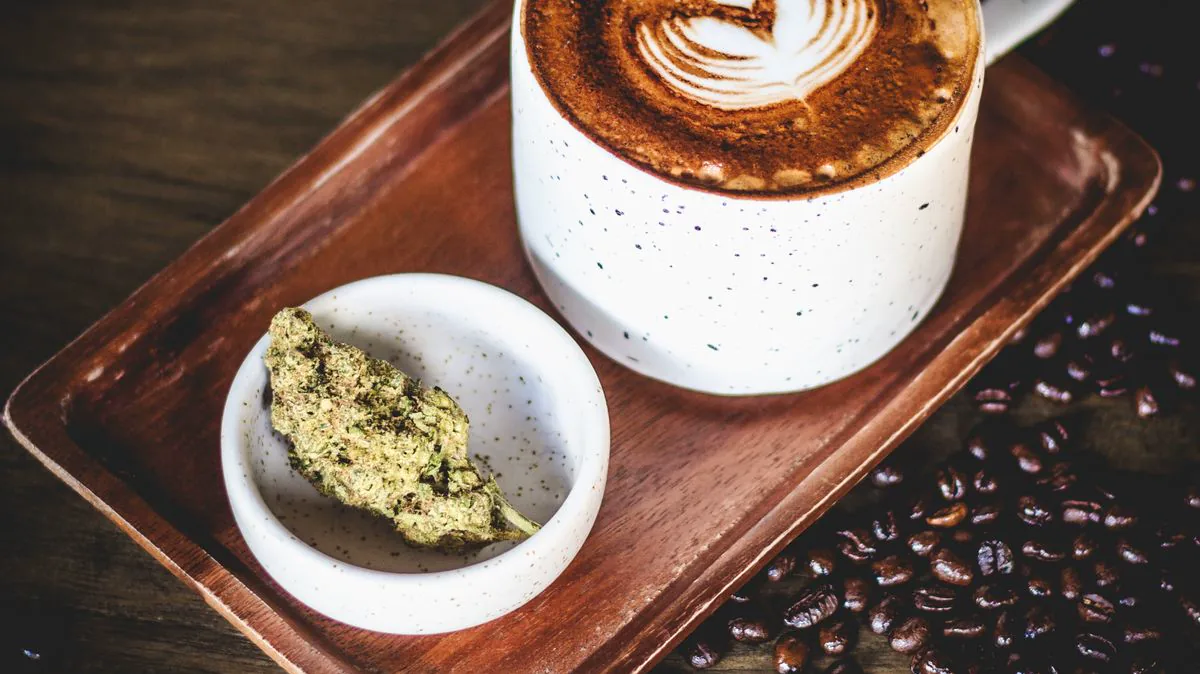
That does not mean cannabis tea is pointless. Prepared properly, it can deliver a gentle, long-lasting effect, or simply serve as a calming drink carrying cannabinoids in their non-psychoactive acid form. The whole trick comes down to two processes: decarboxylation and fat solubility. This article explains how to do it sensibly, what to expect, and what precautions to take.
One caveat up front: we are talking about chemistry and physiology, not medical advice. The figures below come from peer-reviewed research, but individual responses vary widely.
Why water alone falls short: the solubility problem
Cannabinoids like THC and CBD are lipophilic molecules: they get along with fats and poorly with water. In the biopharmaceutical classification, THC is a Class II compound, precisely because of its low water solubility and heavy metabolism. In practical terms: if you drop cannabis into hot water and nothing else, you extract only a tiny fraction of the active compounds.
That is why serious recipes add a source of fat. Whole milk, butter, coconut oil, or even a splash of cream act as a vehicle so the cannabinoids can move from the bud into the liquid. Without that lipid bridge, much of the work goes down the drain.
Decarboxylation: the step almost everyone skips
In fresh or dried plant material, THC does not exist as such. It is present as THCA (tetrahydrocannabinolic acid), its acidic, non-psychoactive form. Turning THCA into THC requires heat: the process called decarboxylation, which strips a carboxyl group from the molecule.
This is where the most common misunderstanding lives. Boiling water reaches 100 °C (212 °F), and that temperature is not enough to decarboxylate efficiently. A study published in the Journal of Chromatography A (Wang and colleagues, 2016) placed the optimal THCA-to-THC conversion range between 105 and 120 °C. Below that threshold, the reaction is slow and incomplete.
The takeaway is clear: if you want a tea with a psychoactive effect, you should decarboxylate the herb in the oven first, before brewing. A common approach is to spread the material in a thin layer and bake it at roughly 115 °C (240 °F) for 40 to 45 minutes. Baking at 120 °C for one hour, or at 105 °C for one to two hours, also converts nearly all the THCA while minimizing the buildup of CBN, a degradation cannabinoid.
What the research says about cannabis tea
The reference study remains the one by Hazekamp and his team, published in the Journal of Ethnopharmacology in 2007, which systematically evaluated the cannabinoid composition of cannabis tea. The authors boiled plant material for 15 minutes and analyzed which cannabinoids ended up in the water.
Two findings are especially useful. First, boiling does trigger some conversion of THCA into THC, but only partially and inconsistently. Second, adding a fatty solubilizer such as milk or non-dairy creamer markedly increased the amount of cannabinoids retained in the liquid, exactly what you would expect from lipophilic molecules. The work also noted that the brew was not indefinitely stable: cannabinoids degrade during storage, so freshly made tea is preferable.
Bioavailability: less than you think
Even if you manage to extract the cannabinoids, your body does not absorb everything you drink. The oral bioavailability of THC is estimated at just 4 to 12 percent, and CBD lands around 6 percent. In other words, much of what you ingest never reaches circulation in an active form.
Fat matters here again. Taking cannabinoids alongside lipids improves their absorption, one more reason not to drink cannabis tea on a completely empty stomach or without any fat in the cup.
Delayed effect: why it is not like smoking
Drinking cannabis is closer to eating an edible than to smoking a joint. Once swallowed, THC passes through the digestive tract and the liver before reaching the bloodstream. During that first pass through the liver, the body converts part of the THC into 11-hydroxy-THC, a metabolite that crosses the blood-brain barrier easily and tends to produce stronger, longer effects.
That is why onset is slow. With edibles, effects appear 30 minutes to 2 hours after consumption, peak between 2 and 4 hours, and can last 6 to 8 hours. The classic mistake is getting impatient and pouring a second cup after twenty minutes: when both doses hit at once, the experience can turn unpleasant.
How to make cannabis tea, step by step
With the theory settled, the practice is straightforward. A reasonable version looks like this:
- Decarboxylate the herb in the oven first (around 115 °C, 40 to 45 minutes) if you want a psychoactive effect. If you only want a mild infusion with acidic cannabinoids, you can skip this step.
- Grind the material coarsely, without pulverizing it.
- Add a source of fat: a spoonful of butter, coconut oil, or whole milk in the cup.
- Simmer gently for 15 to 30 minutes, stirring. The fat pulls the cannabinoids into the liquid.
- Strain thoroughly through a fine filter or mesh bag and serve. Mixing in a flavored tea helps mask the bitterness.
Dosing is the trickiest part. Without lab equipment it is impossible to know how much THC is in your cup, so the golden rule is to start with a small amount of material, wait at least two hours before repeating, and write down what you use so you can adjust next time.
The case for CBD and acidic cannabinoids
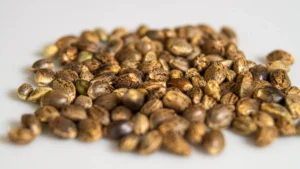
Not all cannabis tea is about getting high. Made with CBD-rich material, or with hemp directly, it yields a drink with no noticeable psychoactive effect. And if you skip decarboxylation, the cannabinoids stay in their acid form (THCA, CBDA), the subject of growing scientific interest, though the clinical evidence remains limited. It is worth being honest: many of the properties attributed to these acidic forms are not yet demonstrated in solid trials.
Legal status in the United States
In the United States, cannabis law is a patchwork. As of 2026, recreational use is legal in a majority of states, medical programs exist in most of the rest, and cannabis remains illegal at the federal level, still listed under the Controlled Substances Act even as a proposed reclassification to Schedule III moves slowly through the process.
Hemp-derived CBD is broadly available nationwide as long as it contains less than 0.3 percent THC, the federal threshold set by the 2018 Farm Bill. Brewing tea from high-THC cannabis is therefore only lawful where state law allows adult or medical use, and always within private premises. Check your state’s rules before you brew.
Bottom line: simple to make, easy to get wrong
Cannabis tea works, but only if you respect its chemistry. Without enough heat, THCA never activates; without fat, the cannabinoids never extract; and without patience, the delayed onset catches you out. Decarboxylate when you want an effect, always add a lipid source, start with low doses, and wait. Done right, it is a discreet, long-lasting way to consume. Done carelessly, it is bitter water with very little in it.
Este artículo también está disponible en español: Cómo hacer té de cannabis: la ciencia detrás de la infusión.