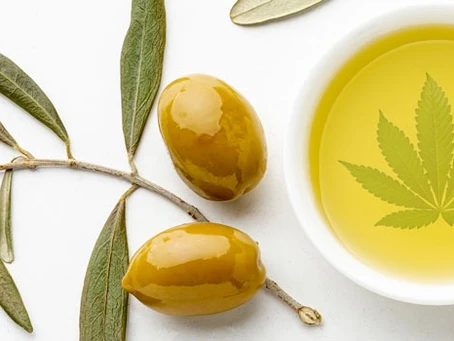
Olive oil is something most of us use every day, because it is healthy and brings real benefits to the table. But what if we add cannabis to it? Cannabis oil is still unfamiliar to people who don’t consume marijuana, though that is changing fast — and with it has come a flood of recipes written as if the outcome were predictable.
It isn’t. Two batches made from the same flower, in the same amount of oil, can end up wildly different in strength depending on the temperature the plant material was heated to, for how long, and what did the extracting.
This guide walks through the process step by step — decarboxylation, choosing a carrier oil, ratios, times, straining and storage — using figures that have actually been measured in a lab, and shows you how to estimate the potency of what you just made. It also covers the part most recipes skip: the hard problem isn’t extraction, it’s dosing.
Four different things get called “cannabis oil”
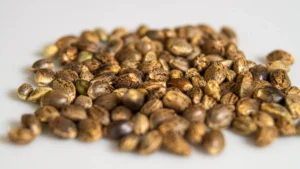
The same phrase covers four products with almost nothing in common. Hemp seed oil is pressed from seeds and contains virtually no cannabinoids. It’s a food, not an active preparation.
Infused oil is what you make at home: olive or coconut oil with cannabinoids dissolved into it. That’s what this article is about.
Concentrated extracts — RSO, BHO, CO2 extraction — are a different animal, thick resins that can exceed 60 % cannabinoid content. And then there are pharmaceutical formulations like Sativex and Epidiolex, dosed to the milligram.
Before you start: choosing your flower
The raw material is the first decision and it shapes the result more than any other step. You can use marijuana rich in THC or CBD flower, and the choice isn’t cosmetic.
If you want an oil with the psychoactive effects of cannabis, you need a THC-rich variety. If you want a preparation with no intoxicating effect, start with CBD-rich flower. Neither one turns into the other, no matter how long you cook it.
Buds work, but so do trichome-covered leaves and dried trim. Infused oil is the classic destination for material that isn’t good enough to smoke: fat extraction doesn’t need premium flower, only resin.
Decarboxylation: the step that sets your potency
Dried cannabis contains very little THC. What it contains is THCA, the acidic precursor, which is not intoxicating. Heat strips a carboxyl group and converts it into THC. The same reaction turns CBDA into CBD.
Kinetic studies published in Industrial and Engineering Chemistry Research measured this reaction at 105, 115, 130 and 145 °C over 10 to 60 minutes. Decarboxylation follows first-order kinetics, and THCA converts fastest of the acidic cannabinoids: suitable conditions are roughly 145 °C (293 °F) for 17 minutes for THCA and 130 °C (266 °F) for 60 minutes for CBDA.
The ceiling is what matters. Above 150 °C (302 °F), THC degrades into CBN, a cannabinoid with a different and considerably weaker effect profile. That’s why home guidance sits below the industrial optimum: spread thin on a baking tray at 110-120 °C (230-250 °F) for 30 to 45 minutes. You give up a little conversion for a much larger margin of error — sensible, since a home oven can run 20 °C off whatever the dial says.
One trade-off is unavoidable: decarboxylation drives off a large share of the terpenes. Romano and Hazekamp documented exactly that, and it explains why homemade oil smells so much fainter than the flower it came from.
Ingredients and equipment
- Buds and trichome-rich leaves, dried and already decarboxylated
- Olive oil (or coconut oil, if you want a solid texture)
- A cloth strainer, cheesecloth or fine mesh
- A pot or saucepan for the water bath
- A glass jar to hold the cannabis and the oil
- A kitchen thermometer — optional, but worth having
Grind the buds first, but don’t overdo it: grinding to powder only pushes more plant matter through your final strain and muddies the flavour.
Why olive oil is the best solvent for home use
The reference study is still Luigi Romano and Arno Hazekamp’s 2013 paper in Cannabinoids, which compared five preparations: naphtha, petroleum ether, ethanol, and two olive oil protocols in a water bath at roughly 98 °C — one for 60 minutes, one for 120.
The decisive finding was about safety. Gas chromatography and NMR analysis found petroleum hydrocarbon residues in the naphtha and petroleum ether extracts even after the solvent had been evaporated, at levels the authors described as roughly equal to the total terpene content of the extract.
Olive oil, by contrast, retained terpenes best — especially with the longer 120-minute heat — is non-flammable, needs no evaporation step and leaves no toxic residue. The authors’ recommendation for home preparation was explicit: use olive oil.
Step by step: the water bath method
A reasonable starting ratio is 10 grams of flower per 100 ml of oil. Any specific number is a guide rather than a rule, because final potency depends on the cannabinoid content of the plant.
Fill the glass jar with your decarboxylated buds and leaves and cover them with olive oil. Place the jar in a water bath for 90 to 120 minutes, stirring occasionally.
Keeping the temperature under control matters: if the oil starts to boil, lift the jar off the heat and let it cool a little. The water bath isn’t fussiness, it’s insurance. Boiling water physically caps the temperature near 100 °C and stops the oil from spiking and destroying what you just activated in the oven. Heating oil in a pan directly over a burner is exactly what causes the big potency losses.
When the time is up, let it cool and strain the oil to remove the plant matter. Press the material well — a good share of your yield stays trapped in the soaked flower.
How strong is it? Estimating potency
No kitchen has a chromatograph, but you can get a working estimate from three numbers, as long as you accept the margin of error.
Say you use 10 grams of flower testing at 15 % THCA: that’s 1,500 mg of THCA. During decarboxylation the molecule loses a CO2 and part of its weight with it — the conversion factor is 0.877 — so your theoretical ceiling is about 1,315 mg of THC.
You won’t recover all of it. A home oil infusion realistically pulls 60 % to 80 % of what’s available, leaving roughly 790 to 1,050 mg spread across 100 ml: somewhere around 8-10 mg of THC per millilitre, or about 2 mg per drop.
The figure isn’t exact. It’s there to tell you whether you’re holding a mild oil or a very strong one, which is precisely what you need to know before the first dose.
Straining, storage and how good oil goes bad
Pour the strained oil into a clean container. Refrigeration improves shelf life, and amber or opaque glass beats clear glass: THC degradation into CBN doesn’t stop when you turn off the heat. Light, oxygen and warmth all accelerate it, and a clear jar on a sunny counter loses potency within weeks.
Fill jars close to the top to minimise headspace air. If straining left damp plant debris behind, use the oil sooner rather than later — moisture and organic matter are how mould gets started.
Labelling the jar with the date and the grams used isn’t bureaucracy. It’s the only reference point you’ll have when you adjust your dose later.
Dosing: the mistake that sends people to the ER
Eating cannabinoids behaves nothing like inhaling them. Oral bioavailability of THC is around 6 %, typically in the 4-12 % range, and hepatic first-pass metabolism converts it into 11-hydroxy-THC, an active metabolite that crosses the blood-brain barrier readily.
Onset runs one to three hours and effects can last 6 to 12. That lag drives the classic mistake: nothing happens, so you take more, and both doses land together.
The clinical data bear this out. Monte and colleagues analysed 9,973 cannabis-related emergency department visits at the University of Colorado Hospital between 2012 and 2016 for Annals of Internal Medicine (2019). Edibles accounted for 0.32 % of statewide sales but 10.7 % of those visits.
And if you assume the industry doses more accurately, a JAMA study by Vandrey (2015) tested 75 edible products from US dispensaries and found only 17 % were accurately labelled. Hence the only sensible protocol with homemade oil: start with a very small amount, wait at least two hours, and never redose within the same session.
BHO: butane is not a home method
Butane extraction shows up in the same searches, and it deserves a separate warning. A study in the Journal of Medical Toxicology (Bell et al., 2015) reviewed BHO-related burn admissions at Colorado’s regional burn center between 2008 and 2014: 29 cases, with a median burn size of 10 % of total body surface area and a range from 1 % to 90 %.
Butane is heavier than air and pools at floor level. A refrigerator thermostat or a light switch is enough to ignite it. Which is why it stays illegal even where cannabis isn’t: California bans volatile solvent extraction without a license, and in Colorado, C.R.S. 18-18-406.6 makes it a felony without a certified closed-loop system.
Therapeutic use: what the evidence supports
The 2017 National Academies of Sciences, Engineering, and Medicine report found conclusive or substantial evidence that cannabinoids are effective for chronic pain in adults, for chemotherapy-induced nausea and vomiting, and for patient-reported multiple sclerosis spasticity. By contrast, there are no published human trials showing that any cannabis preparation cures cancer, whatever is claimed for Rick Simpson Oil.
If pain relief is what brought you here, we cover that specific use in depth in our guide to cannabis oil for pain, including the pain types studied and the doses used in the literature.
Where the law stands
In the United States, an order issued on 24 April 2026 moved FDA-approved marijuana products and products regulated under a state medical marijuana license into Schedule III, while bulk marijuana and unlicensed extracts stayed in Schedule I; a DEA hearing opened on 29 June 2026 to consider broader rescheduling. In practice, infusing oil from cannabis you legally possess is treated like any other personal-use preparation, making it with butane is a separate offence in most states, and selling it is a different legal category entirely.
Other countries run different models. Spain regulated medical cannabis preparations for the first time under Royal Decree 903/2025, with oily oral THC and CBD solutions now compounded and dispensed in hospital pharmacies, while recreational users typically source through private members’ associations — a model we cover in our guide to cannabis clubs in Madrid.
The honest summary
Making cannabis oil at home is technically straightforward, and the evidence points to a clear method: decarboxylate below 150 °C, extract into olive oil in a water bath, strain well, store cold in opaque glass, and avoid volatile solvents entirely.
What you cannot do at home is measure precisely. Without lab analysis you have estimates, not doses, and that’s where the real problems cluster. Start low, wait, and write down what you used — that’s the difference between a useful preparation and a bad afternoon.
Este artículo también está disponible en español: Cómo hacer aceite de cannabis en casa, paso a paso.