Kifi, What Is It? Do you know what the precious sticky crystals that cover marijuana flowers are called? Of course you do — they are trichomes, the part of the plant where the resin glands are located, containing the valuable terpenes and cannabinoids that give cannabis its well-known psychoactive and medicinal effects.
These tiny crystals that look like a kind of shiny dust or frost covering the buds are actually an extremely complex plant structure. At first glance they may appear as tiny white or transparent dots, but if you observe them with a magnifying glass or microscope you can see they have a very particular shape: a small stalk topped with a bulbous head where the resin accumulates.
It is inside this resin where the plant’s most valuable compounds are concentrated. This is where cannabinoids are found, the compounds responsible for the effects of cannabis, as well as terpenes, which are the aromatic molecules that determine the characteristic smell and flavor of each cannabis strain.
The more trichomes a cannabis flower has, the greater its potential in terms of aroma intensity, potency, and overall quality. That is why when growers talk about “frosty” buds covered in crystals, they are actually referring to the abundance of trichomes that developed during the flowering stage.
Inside these resin glands found on the buds we can find the most psychoactive part of the marijuana plant, and therefore the Kifi obtained from them can be extremely intense.
This happens because the head of the trichome contains a very high concentration of active cannabinoids. Among them, THC stands out as the compound mainly responsible for the psychoactive effects of cannabis, although other compounds such as CBD, CBG, and CBC can also be found, influencing the overall effects of each strain.
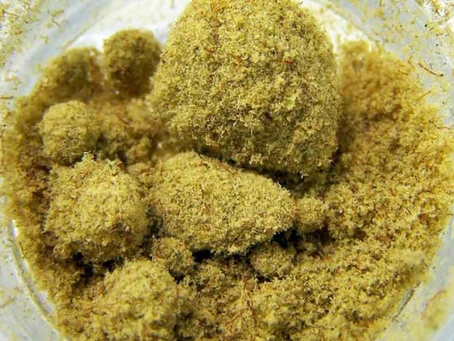
When trichomes are separated from the rest of the plant material, a very fine powder known as Kifi or Kief is obtained. This powder is extremely rich in resin, which means its potency can be much higher than the cannabis flower it comes from.
For this reason, even small amounts of Kifi can be quite powerful. Its high concentration of active compounds makes it one of the most appreciated products among cannabis enthusiasts.
A dry extraction of trichomes can result in Kifi of excellent quality or extremely poor quality, depending on how the plants were harvested. As a general rule, in Spain a low-quality Kifi is often known, which comes from Morocco and has been extracted from poor genetics and plants dried under the sun, among many other practices that are far from ideal.
For many years, much of the Kifi circulating in Europe came from traditional productions in North Africa. In these productions, cultivation and processing techniques were not always carried out under high-quality standards.
Plants were often grown with poorly selected genetics, dried directly in the sun, and later beaten over fabrics or sieves to detach the resin. While this method can be effective for producing large amounts of resin, it can also drag a lot of plant material with it, reducing the final quality of the product.
As a result, the Kifi produced could be darker, with less defined aromas and a potency far lower than what could be achieved with better production methods.
However, if you decide to extract Kifi at home using good strains, proper practices, and the help of screens or sieves, you can obtain Kifi of excellent quality.
Today there are very simple tools that make this process relatively easy to perform at home. Extraction screens are designed with different micron sizes to separate trichomes from the rest of the plant material.
The process usually consists of placing dried buds or trim over the screen and gently agitating the material. Because trichomes are fragile when dry, they easily detach and fall through the screen as a fine powder.
This powder is what we call Kifi.— a substance extremely rich in resin and aromatic compounds. When it is obtained from well-grown plants, the result can be a light-colored, very aromatic, and high-quality Kifi.
It is also recommended to work in a cool environment, since low temperatures help trichomes detach more easily. Some growers even place the plant material in the freezer for a while before performing the extraction.
What is Kifi, Kief, Keef or Kit?
Kifi mainly refers to the formation of crystals or trichomes — resin glands where the terpenes and cannabinoids that give cannabis all its properties are found.
The term may vary depending on the language or region. In English, the word Kief is commonly used, while in some places it is spelled Keef or simply Kif. All of these terms refer to the same concept: the powder made up of trichomes that fall off cannabis flowers.
Historically, the term has also had different meanings across cultures. In some areas of North Africa, it was used to refer to traditional mixtures of cannabis and tobacco, while in the modern context it is mainly used to describe cannabis resin in powdered form.
The Kifi that we prepare at home using a plant with good genetics that has been properly grown and treated will have nothing to do with the Kifi traditionally known from Morocco.
Plant genetics are one of the most important factors for achieving a good result. Some cannabis strains have been selected for years specifically because of their ability to produce large amounts of trichomes.
These varieties tend to produce buds heavily covered in crystals, which makes it easier to obtain high-quality Kifi. In addition, cultivation techniques, lighting, nutrients, and the drying process greatly influence the final quality of the resin.
High-quality Kifi should consist only of the bulbous heads of the trichomes found on cannabis buds, since the substance itself is just one part of the trichome.
When the extraction process is carried out correctly, Kifi should mainly be composed of trichome heads. These tiny structures contain the highest concentration of resin and active compounds.
If the process is performed too aggressively, fragments of leaves or parts of the trichome stalks may also detach, reducing the purity of the final product.
For this reason, experienced extractors often use different screens to separate the material according to size and purity.
This type of external trichome can also be found in various plants and algae, where they serve specific purposes. In carnivorous plants, for example, their function is to trap prey. In the case of cannabis, they act as a protective mechanism, functioning as a deterrent against predators.
Trichomes perform defensive roles in many plant species. They can produce sticky, aromatic, or even toxic substances that help protect the plant from insects and herbivorous animals.
In cannabis plants, the resin acts as a kind of protective barrier that makes it difficult for insects to feed on the plant.
Cannabis trichomes can cause herbivorous predators to lose their appetite, since once they begin feeding they may experience disorienting psychoactive effects that prevent them from continuing. The powerful aroma released by the resin can also attract pollinating insects, helping the plant reproduce through pollen.
In addition to their defensive role, the resin also plays an important role in how the plant interacts with its environment. The intense aromas produced by terpenes can attract beneficial insects or help the plant chemically communicate with nearby plants.
Some studies also suggest that trichomes may help protect the plant from ultraviolet radiation from the sun, acting as a natural protective filter.
What is the difference between Kifi and Hash?
In reality, extracting Kifi is one of the first steps in producing hashish. Hashish is essentially Kifi that has been heated and pressed into a greenish-brown ball. When heat and pressure are applied to Kifi, the resin glands break and their composition changes, which alters both the flavor and the effects.
When pressure is applied to Kifi, the trichome heads break open and release the resin they contain. This resin becomes sticky and allows the particles to bond together, forming a compact mass.
Depending on the method used, hashish can have different textures, colors, and aromas. Some types of hash are softer and darker, while others may be lighter and more crumbly.
Compared to loose Kifi, hashish is usually easier to handle and store. However, many enthusiasts prefer pure Kifi because it preserves the original aromatic profile of the plant more faithfully.
Kifi allows the quality of the resin to be appreciated more directly, since it has not undergone transformation processes. For this reason, many growers and extractors consider high-quality Kifi to be one of the purest ways to enjoy cannabis resin.
Conclusion
What is Kifi? Is one of the purest and most concentrated forms of cannabis resin, as it is composed mainly of the trichomes that cover the plant’s buds. These tiny glands contain a large portion of the compounds responsible for the aroma, flavor, and effects of cannabis, making Kifi a product highly appreciated for its potency and richness in resin.
Although it has traditionally been associated with lower-quality productions made using less careful methods, the truth is that when it is obtained from well-grown plants, with good genetics and proper extraction techniques, Kifi can reach exceptional levels of quality. The key is preserving the trichome heads and preventing plant material from contaminating the final product.
If you want to get more information about news related to this topic, you can visit our website.